Water damage restoration costs most homeowners between about $1,400 and $6,400, with a national average near $3,900. Where your bill lands depends mainly on the type of water involved, how much space it reached, and how quickly drying started.
That range is wide for a reason. A small clean water leak caught the same day is a very different job from a sewage backup in a finished basement. This guide breaks down the numbers so you can judge an estimate before you sign anything.
The figures here are national industry benchmarks from 2026 cost guides. Quotes in Plano and the surrounding area can land above or below them, so use these ranges to understand an estimate, not to predict one to the dollar.
Water Damage Restoration Cost at a Glance
| Water category | Typical source | Mitigation cost per square foot |
|---|---|---|
| Category 1, clean water | Burst supply line, overflowing tub, rainwater intrusion | About $3 to $4 |
| Category 2, gray water | Washing machine, dishwasher, sink overflow | About $4 to $7 |
| Category 3, black water | Sewage backup, floodwater, groundwater | $7 and up |
Mitigation covers extraction, drying, and sanitizing. Rebuilding is priced separately, and that is where many homeowners get surprised.
What Is the Average Cost to Fix Water Damage?
Industry cost guides put the national average around $3,860, with most projects falling between $1,400 and $6,400. A minor clean water leak caught early can cost a few hundred dollars. Sewage backups and flooded basements can climb past $16,000.
Averages hide a lot, though. The same average covers a wet bathroom floor and a flooded ground floor, so the better question is what your specific loss involves. Three things set the price more than anything else: the water category, the affected square footage, and the time between the leak and the first drying equipment.
Water Damage Restoration Cost Per Square Foot
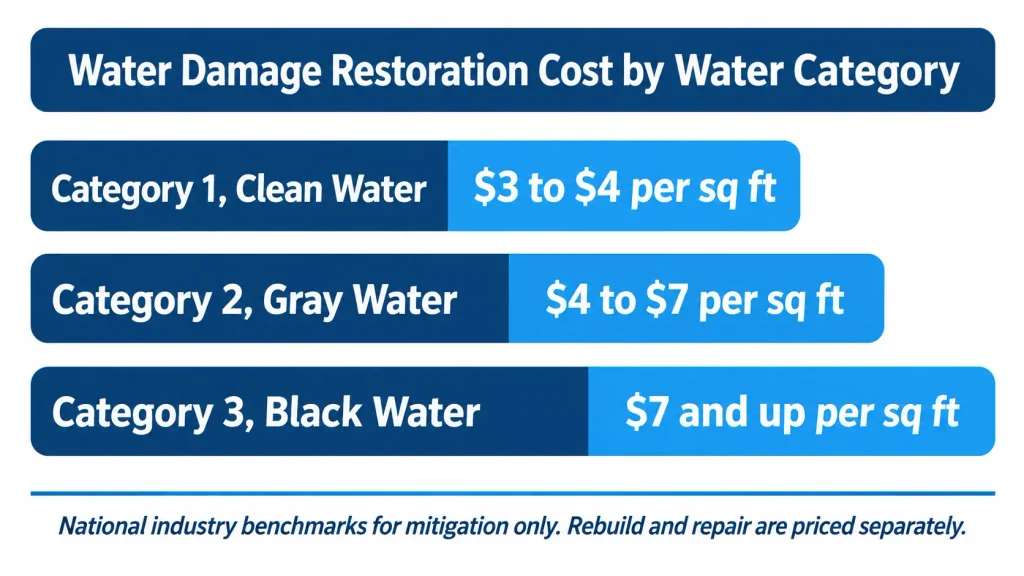
Mitigation typically runs $3 to $7.50 per square foot, depending on the water category.
Category 1, clean water. This comes from a sanitary source like a supply line. Most materials can be dried and saved, so it is the least expensive category at roughly $3 to $4 per square foot.
Category 2, gray water. Water from appliances carries some contamination. It needs more cleaning and more caution, and it runs roughly $4 to $7 per square foot.
Category 3, black water. Sewage and floodwater require protective equipment, containment, and disposal of porous materials. Expect $7 per square foot and up, often two or more times the cost of clean water. If you are dealing with a sewage backup, our sewage backup cleanup page explains why this category is handled so differently.
Time can move you between these categories. Clean water that sits for a day or two can degrade into Category 2, which raises the water mitigation cost before anyone even arrives.
Mitigation and Rebuild Are Two Separate Price Tags
Restoration has two phases, and estimates often blur them.
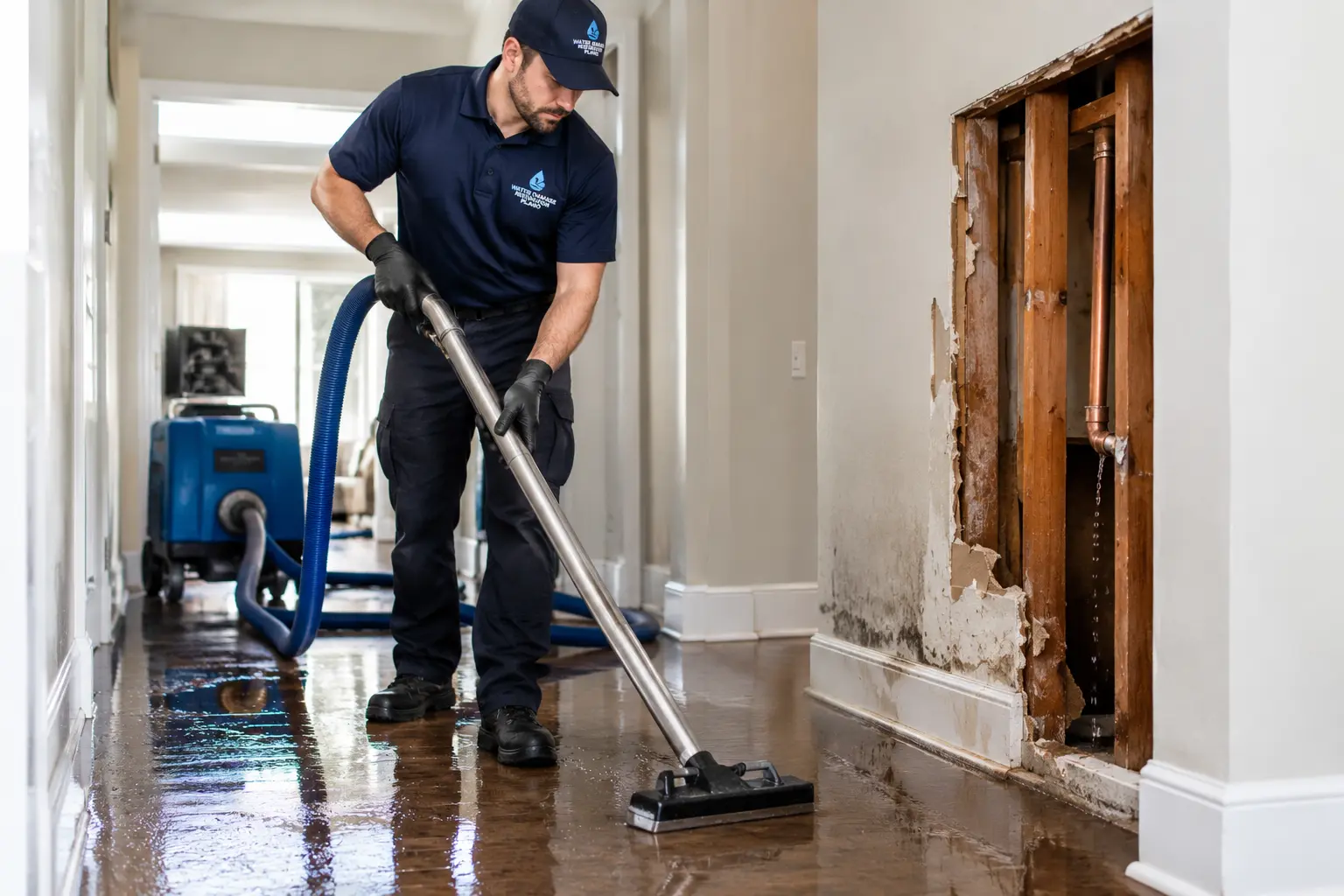
Mitigation is the emergency work: water extraction, drying equipment, moisture monitoring, and sanitizing. It stops the damage from spreading.
Rebuild and repair is replacing what could not be saved, such as drywall, baseboards, carpet pad, flooring, insulation, and paint. Industry guides put this at roughly $20 to $37 per square foot of affected material.
The key detail is that rebuild costs apply only to materials that need replacing, not to the whole room. Water often wicks a foot or two up a wall, so the bill might include lower drywall and baseboards but not the whole ceiling.
If mold takes hold, remediation is a third cost. It commonly runs $15 to $30 per square foot, which is why fast drying is the cheapest protection you have. Our mold remediation page covers when mold becomes a separate job.
What Pushes the Cost Up or Down
Water category and time. Contaminated water and long wait times raise the rate per square foot. Calling within hours keeps you in the cheaper tier.
Affected area. More square footage means more equipment, more days of drying, and more materials to replace.
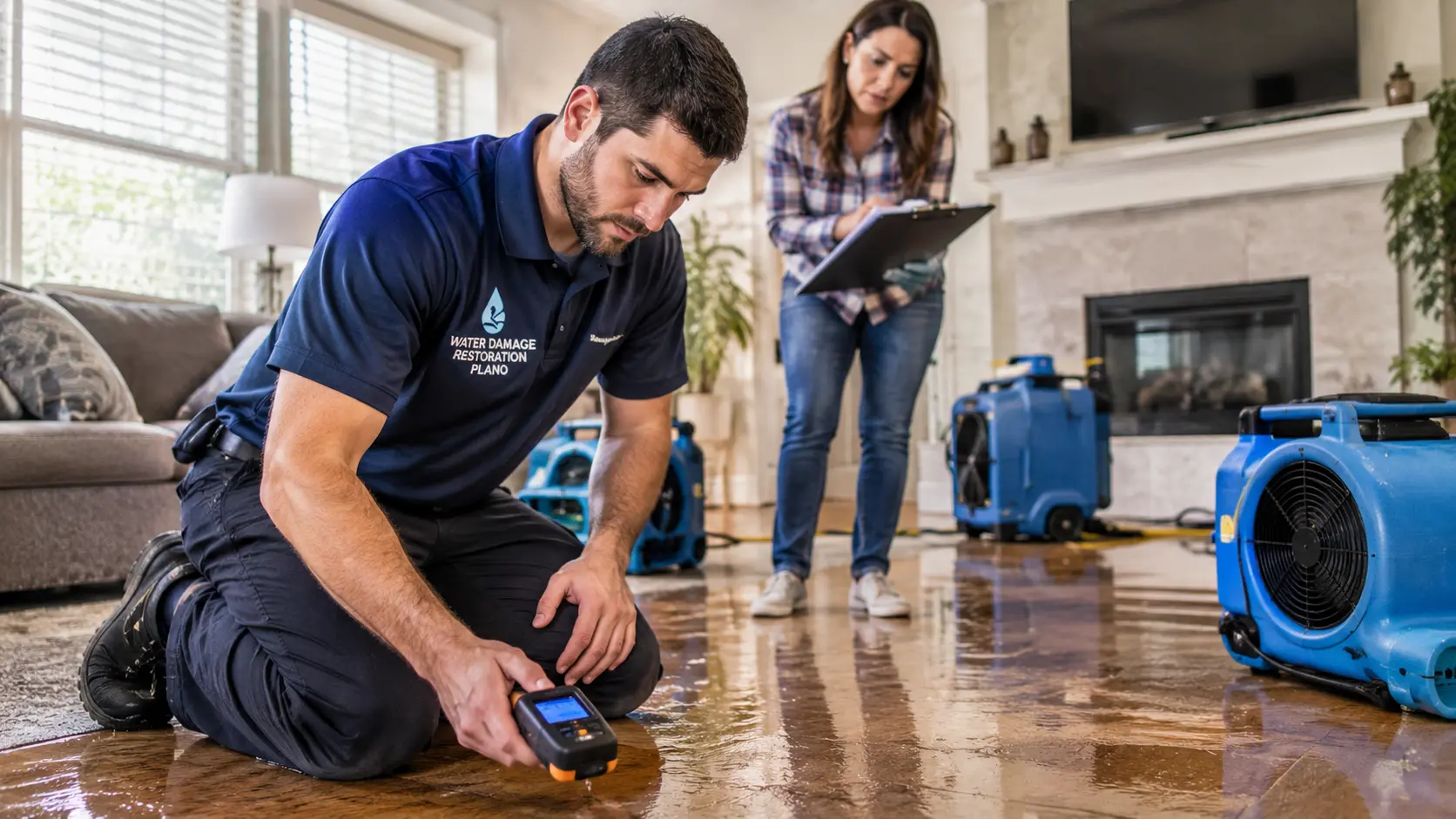
Hidden moisture. Water that reached wall cavities, insulation, or subfloors takes longer to dry. Moisture meters and thermal imaging find it, and finding it early prevents a repeat claim later.
Materials involved. Carpet is usually cheaper to deal with than hardwood, plaster, or tile. Solid hardwood can need specialized drying, and sometimes replacement.
Mold. Once growth starts, the project gains a whole new scope.
Access. Crawl spaces, attics, and finished basements take more labor than an open room.
Contents. Furniture and belongings that need pack out, cleaning, or storage add to the total.
Drying time. Equipment is often billed per day, so a job that needs five days costs more than one that needs three.
Three Sample Cost Scenarios
These examples use the mitigation rates above. Rebuild costs are separate and depend on what materials are damaged.
A small clean water leak. A supply line fails in a 150 square foot bathroom and is caught within hours. At $3 to $4 per square foot, mitigation runs about $450 to $600.
A washing machine overflow. Gray water reaches 400 square feet of flooring across a laundry room and hallway. At $4 to $7 per square foot, mitigation runs about $1,600 to $2,800.
A sewage backup in a basement. Black water covers 600 square feet. At $7 per square foot, mitigation alone starts around $4,200, and removal of contaminated carpet and drywall pushes the total higher.
Notice how much the category matters. The basement is only four times larger than the bathroom, but the water category makes the mitigation cost about seven times higher at the low end.
Does Insurance Cover Water Damage Restoration Cost?
Often, yes, if the cause was sudden and accidental. A burst pipe, a failed water heater, or a washing machine hose that gave way is commonly covered under a standard homeowners policy.
Slow leaks, long term seepage, and damage from poor maintenance are often excluded. Flood damage from rising outside water usually requires a separate flood policy. Sewage backup coverage is frequently a separate endorsement.
Three things shape what you actually pay:
- Your deductible comes out of any payout.
- Repairing the broken pipe itself may be treated differently from the water damage it caused.
- Documentation and timing matter. Photos, a clear timeline, and prompt mitigation make a claim much easier to support.
Policies vary, so read yours or call your agent. Many restoration companies offer direct billing, which means the company coordinates paperwork with your insurer so you are not fronting the full cost.
How to Read a Water Damage Restoration Estimate
A good estimate is itemized. Look for separate lines for extraction, drying equipment and days, moisture monitoring, sanitizing, demolition and disposal, and any rebuild work.
Questions worth asking:
- What water category did you assess, and how did you determine it?
- How many drying days and how many pieces of equipment are included?
- Will you take moisture readings each day, and what reading means we are done?
- Is rebuild work included, or is this mitigation only?
- Do you bill my insurance directly?
Red flags:
- A flat price quoted over the phone with no inspection
- No moisture readings or monitoring plan
- Pressure to sign immediately
- A request for full payment before work begins
- No mention of certification, such as IICRC training
A clear written scope protects you far more than a low number does. The cheapest estimate that skips drying checks tends to be the most expensive one by the time mold shows up.
Learn about: Signs of Water Damage in Walls
Can You Save Money by Doing It Yourself?
For a very small spill on a hard floor, yes. A wet vacuum and a fan are enough.
Once water reaches carpet pad, drywall, insulation, or a wall cavity, household tools cannot dry it fully. The moisture stays behind, and that is how a few hundred dollars of cleanup turns into a mold problem that costs $15 to $30 per square foot. If water has spread beyond a small area, professional extraction and monitored drying usually cost less than the repair that follows a failed DIY attempt.
How to Keep Your Final Bill Down
- Stop the source. Shut off the main water valve or the affected line right away.
- Call quickly. Starting drying within the first day keeps water in the cheaper category and prevents mold.
- Document everything. Photograph the damage and the source before anything is moved.
- Remove small items. Move rugs, electronics, and furniture out of the water if it is safe.
- Ask for itemized estimates. Compare scope, not just the total.
- Keep drying until it is verified. Stopping early is the most common reason damage returns.
Get a Clear Estimate Before You Commit
Every property and every loss is different, and no article can replace an on site assessment. If you are dealing with water damage in Plano or nearby Collin County communities, our water damage restoration team can inspect the area, take moisture readings, and give you an itemized scope before any work begins.
Frequently Asked Questions
How much does water damage restoration cost for a house?
Most homeowners pay between about $1,400 and $6,400, with a national average near $3,900. Large floods and sewage backups can exceed $16,000.
How much does water damage restoration cost per square foot?
Mitigation typically runs $3 to $7.50 per square foot depending on the water category. Rebuild and repair add roughly $20 to $37 per square foot of affected materials.
Is it cheaper to dry a house out or replace materials?
Drying is almost always cheaper when it starts quickly and the water is clean. Replacement becomes necessary when materials stay wet too long or contact contaminated water.
Why do water damage restoration quotes vary so much?
Quotes differ in the scope they include, the equipment and days they assume, and whether rebuild is part of the price. Comparing itemized estimates is the only reliable way to compare them.
Will my insurance pay for water damage restoration?
Sudden and accidental water damage is commonly covered, subject to your deductible and policy terms. Gradual leaks and outside flooding are often treated differently.