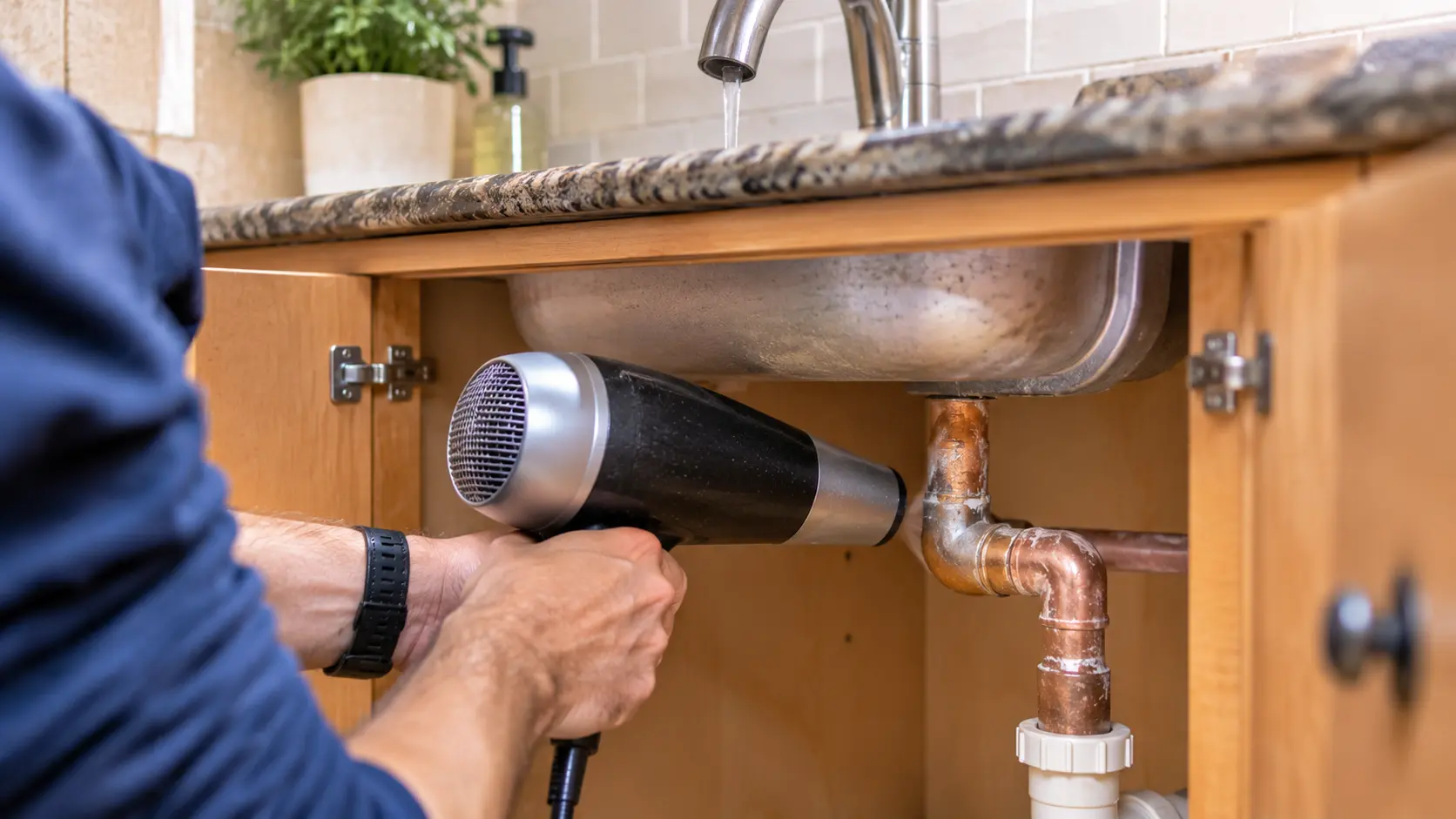
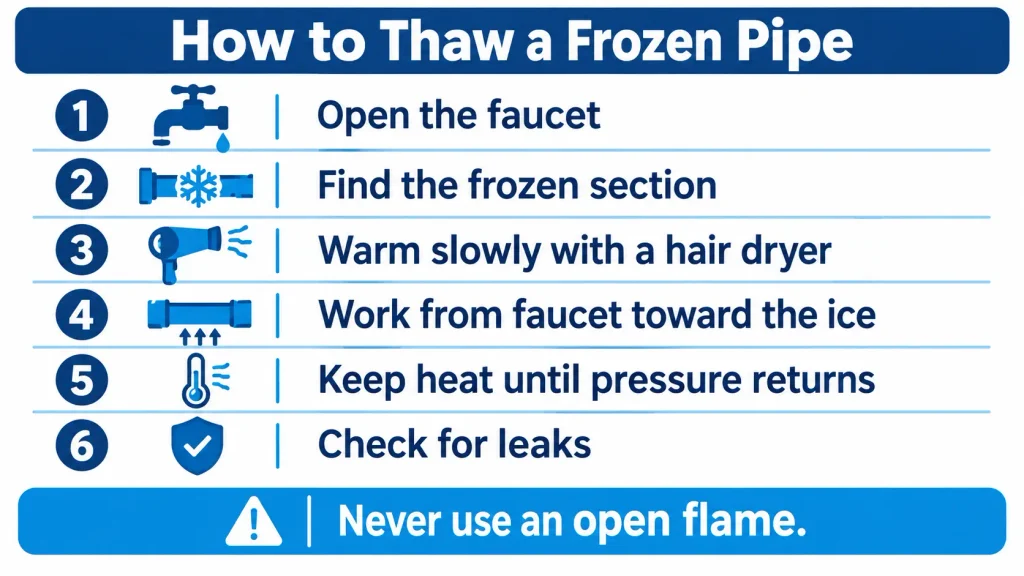
How to thaw frozen pipes: open the faucet the pipe feeds, then warm the pipe slowly with a hair dryer, heating pad, or warm towels. Start at the faucet end and work back toward the frozen section, and never use an open flame. If you cannot find the frozen spot, or the pipe will not thaw, call a licensed plumber.
Here are the steps in order:
- Open the faucet the pipe feeds, and leave it open.
- Check whether your neighbors have water, in case it is a utility problem.
- Find the frozen section by looking for frost, a bulge, or a very cold spot.
- Warm the pipe slowly from the faucet end back toward the frozen section.
- Keep applying gentle heat until full water pressure returns.
- Turn the water back on slowly and check for leaks.
- Call a plumber if you cannot reach the pipe or it will not thaw.
North Texas freezes less often than northern states, which is why frozen pipes cause so much trouble here. Many homes have pipes in attics, garages, and exterior walls that were never built for a hard freeze.
How to Tell a Pipe Is Frozen
The most common sign is a faucet that runs as a trickle or does not run at all, even though the rest of the house has water. Other clues include frost on exposed pipe, a pipe that feels very cold to the touch, or a bulge in the line.
If every faucet is dry, check with a neighbor first. If their water is out too, the problem may be a utility issue, and the city water utility is the right call, not a hair dryer.
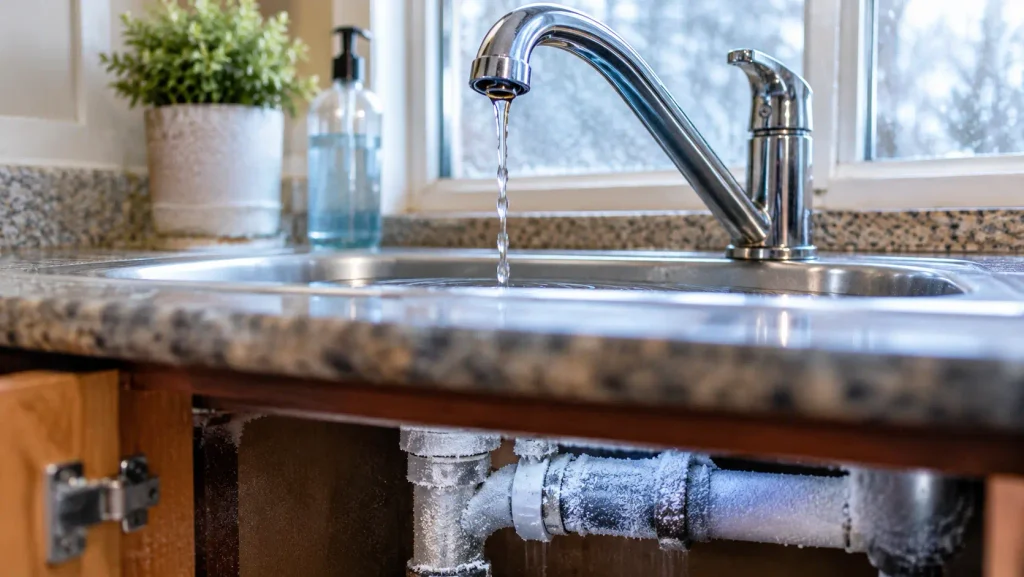
Where Pipes Freeze in North Texas Homes
Cold air reaches some spots far more easily than others. In this area, the usual trouble spots are:
- Pipes in the attic, where insulation sits on top of lines that get little warmth
- Supply lines in exterior walls
- Garage plumbing, including water heater lines and washing machine connections
- Outdoor faucets and hose connections
- Irrigation lines and exposed backflow preventers
Weather safety guidance commonly puts the danger point at around 20 degrees Fahrenheit, and exposed pipes can freeze sooner. Treat any forecast near or below 20 degrees as a prompt to prepare.
How to Thaw Frozen Pipes: Step by Step
1. Open the Faucet
Before you apply any heat, open the faucet the frozen pipe feeds. As the ice melts, water and pressure need a place to go, and moving water also helps melt more ice. Keep the faucet open the whole time.
2. Find the Frozen Section
Look for frost, a bulge, or a spot that feels colder than the rest of the pipe. If the pipe is inside a wall or ceiling and you cannot see or reach it, skip to the plumber step below.
3. Warm the Pipe Slowly
Use a hair dryer, an electric heating pad wrapped around the pipe, or towels soaked in hot water. Begin at the faucet end and work back toward the frozen section, keeping the heat moving instead of holding it on one spot.
An open tap gives melting ice an exit, which lowers the chance of trapped pressure.
4. Keep Going Until Pressure Returns
Continue warming until water flows at full pressure. Pipes can have more than one frozen spot, so check every faucet in the house once flow returns.
5. Watch for Leaks
When the water comes back, turn the supply on slowly and check joints, fittings, and the pipe itself for cracks or drips. A pipe can crack while it freezes and only reveal the crack when it thaws.
6. Know When to Call a Plumber
Call a licensed plumber if you cannot locate the frozen area, if it is inside a wall or ceiling, or if the pipe still has not thawed after you have tried safe heat.
What Not to Do When Thawing a Frozen Pipe
- Never use an open flame. A torch, lighter, or propane heater can ignite insulation and framing, and it can damage the pipe.
- Do not use a device that boils the ice. Excess heat can crack the pipe.
- Do not leave a space heater unattended near pipes or flammable materials.
- Keep electrical tools away from water. A hair dryer and its cord must stay clear of any water that starts to flow.
- Do not hold heat on a single spot. Keep it moving along the pipe.
- Do not ignore a trickle. A slow faucet is the first warning sign.
If water suddenly gushes while you are heating the pipe, unplug the heat source and close the nearest shutoff valve right away. Our guide on what to do after a pipe bursts walks through the full emergency steps.
Why the Thaw Is the Risky Moment
A frozen pipe is already under strain. Ice can crack it during the freeze, but the crack often stays sealed by the ice itself. Once temperatures rise and the ice melts, water pushes through, and a plumbing problem becomes a flooding problem.
That is why the February 2021 winter storm sent water through so many North Texas homes during the thaw, not during the freeze. If you have just thawed a pipe, stay near it for a while and keep checking for leaks, especially in attics and wall cavities.
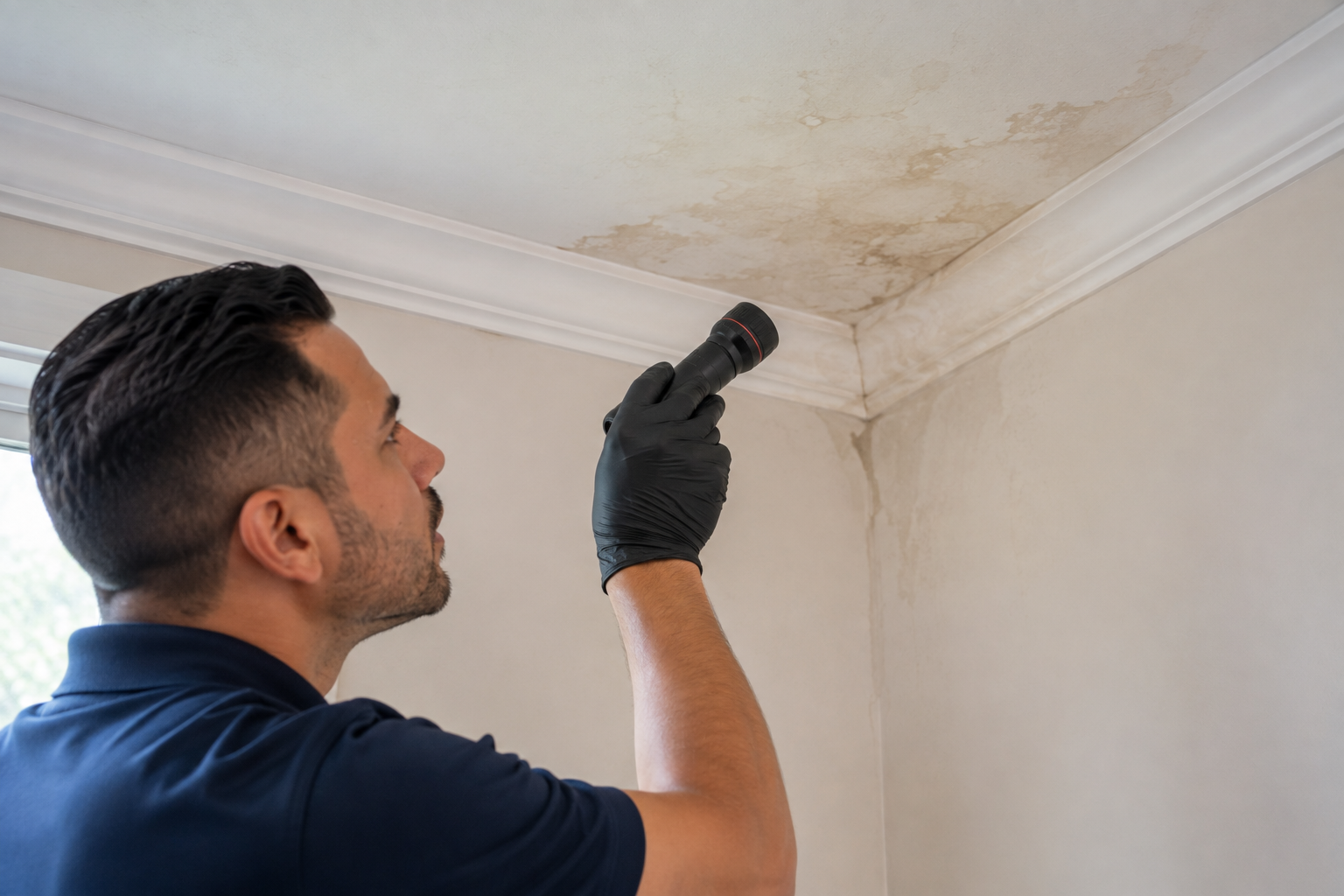
Water that escapes into a ceiling or wall can stay hidden. Watch for signs of water damage in walls, such as stains, bubbling paint, a musty smell, or soft drywall.
How to Prevent Frozen Pipes in North Texas
- Let faucets drip. A slow trickle keeps water moving. Choose faucets on exterior walls or served by exposed pipes, and the faucet farthest from your main valve.
- Open cabinet doors under kitchen and bathroom sinks on exterior walls so warm air reaches the pipes.
- Keep the heat steady. Hold the thermostat at the same setting day and night, and never below 55 degrees Fahrenheit, even when you travel.
- Insulate exposed pipes in attics, garages, and other unheated spaces.
- Seal gaps where cold air enters near pipes, but never block a dryer vent.
- Disconnect and drain garden hoses, and cover outdoor faucets before a freeze.
- Protect irrigation systems. Cover or insulate exposed backflow preventers and above ground lines.
- Know your main shutoff. Take a photo of its location today, so you are not searching during an emergency.
- Keep garage doors closed during cold snaps to hold heat around garage plumbing.
What to Do If a Frozen Pipe Bursts
If water is flowing, shut off the main valve first, then turn off power to wet areas only if it is safe. Photograph the damage before you move anything, and call a plumber for the pipe and a restoration company for the water.
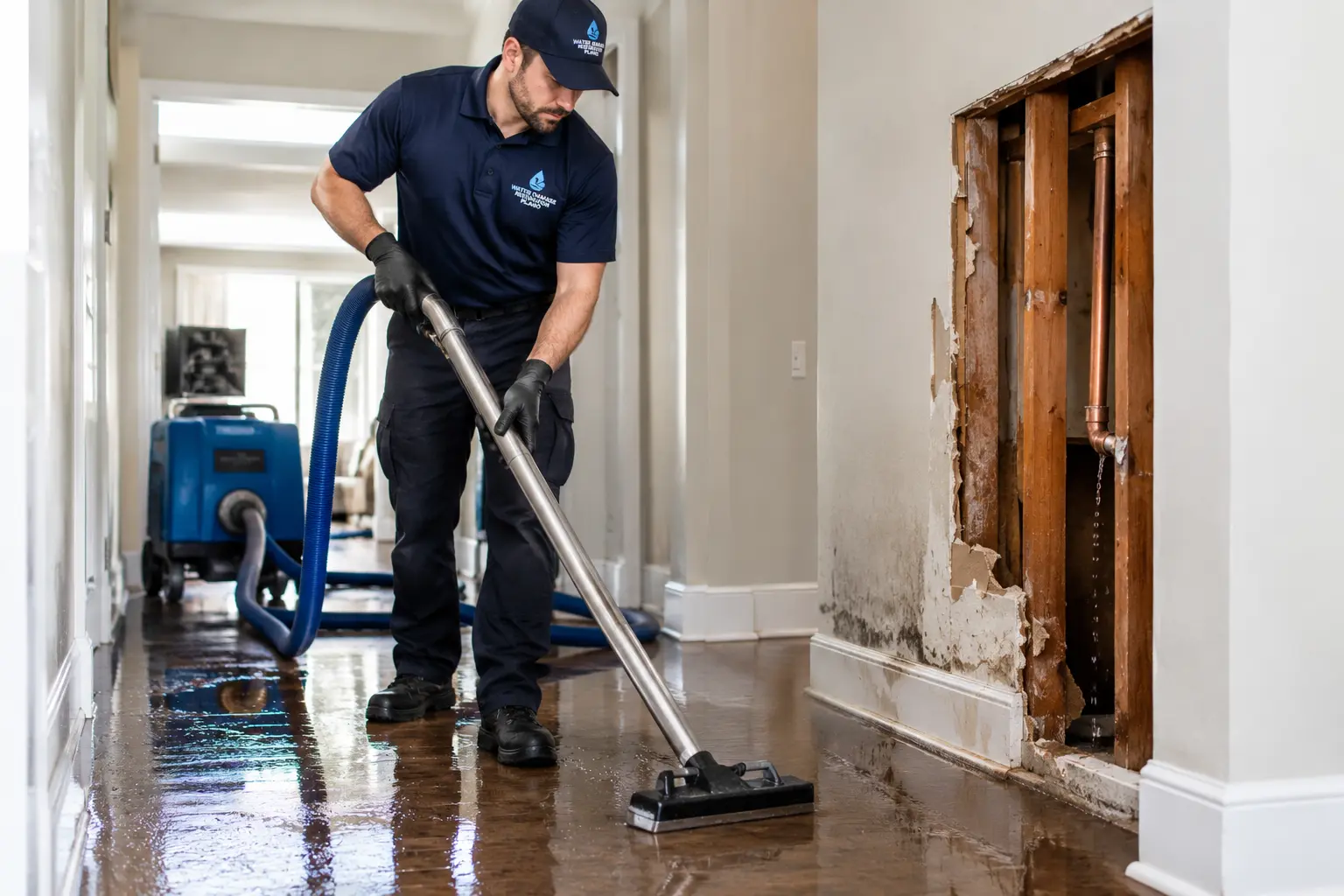
Our burst pipe cleanup service handles extraction, drying, and repairs after a burst, and our water extraction team can start removing standing water right away. Drying matters as much as extraction, because moisture left in walls and subfloors leads to mold. Our structural drying services page explains how that works.
If the pipe burst at a business, see our commercial water damage restoration page for how we limit downtime.
Frequently Asked Questions
At what temperature do pipes freeze?
Pipes become at risk when outdoor temperatures drop to around 20 degrees Fahrenheit or lower, and exposed pipes in attics, garages, and exterior walls can freeze sooner.
How long does it take to thaw a frozen pipe?
It depends on where the ice is and how much there is. Keep applying gentle heat until full water pressure returns, and call a plumber if you make no progress.
Should I let both hot and cold taps drip?
For exposed pipes, a slow trickle from the faucets they serve helps. If you can only choose one, drip the faucet farthest from your main valve on an exterior wall.
Will a frozen pipe always burst?
No, but ice can crack a pipe without any visible leak until the thaw. That is why you should check for leaks as soon as flow returns.
Does insurance cover a burst frozen pipe?
Sudden and accidental burst pipe damage is commonly covered, though policies can have conditions, such as keeping the home heated. Insurers also treat a burst pipe differently from a flood, as explained in our guide on whether homeowners insurance covers flood damage in Texas.
If a Freeze Has Already Caused Damage
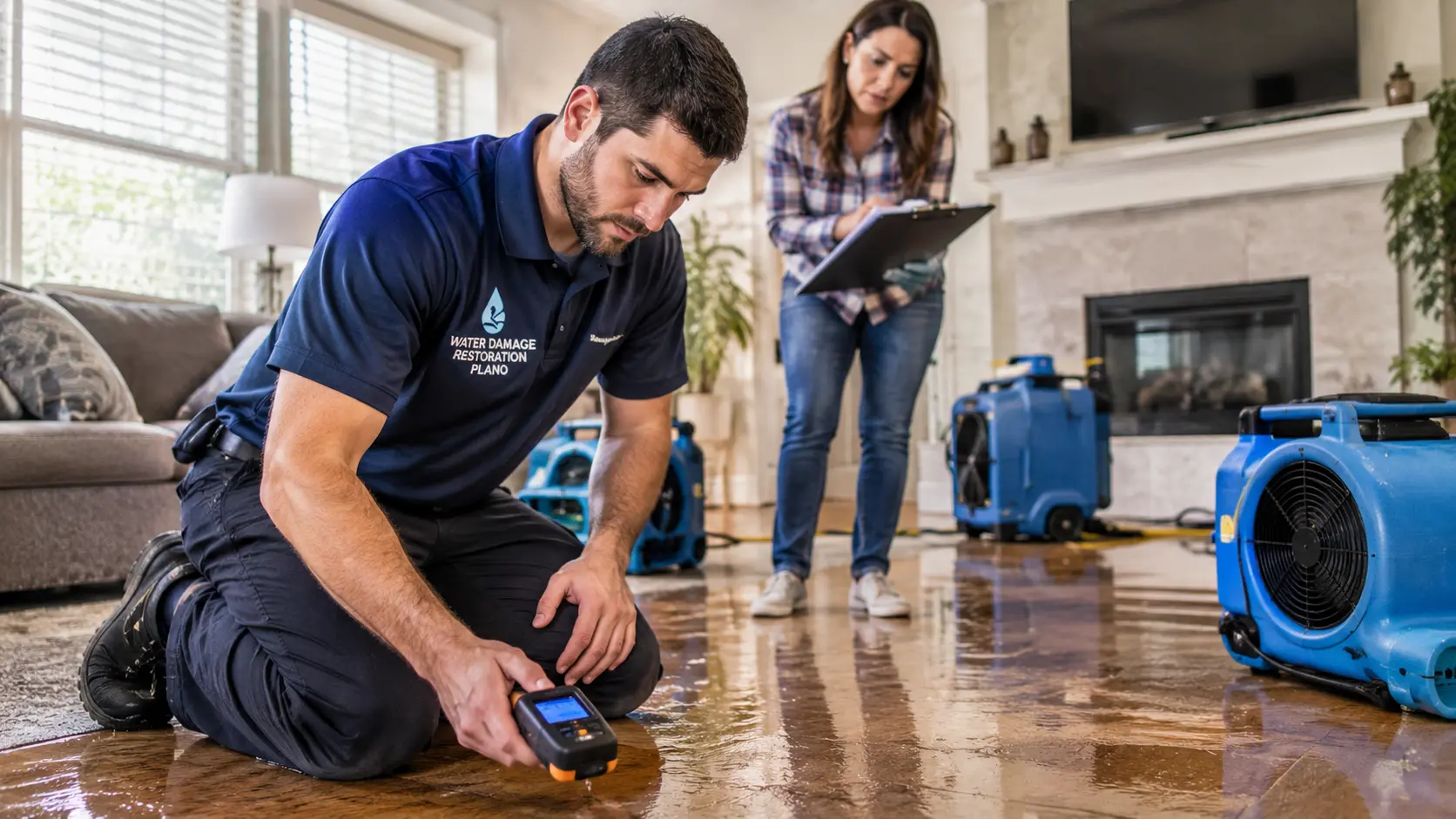
If you are dealing with water after a freeze, do not wait. Our water damage restoration team can start extraction and drying and help you document the loss. We serve Plano and nearby communities, including Frisco , Allen and Mckinney.